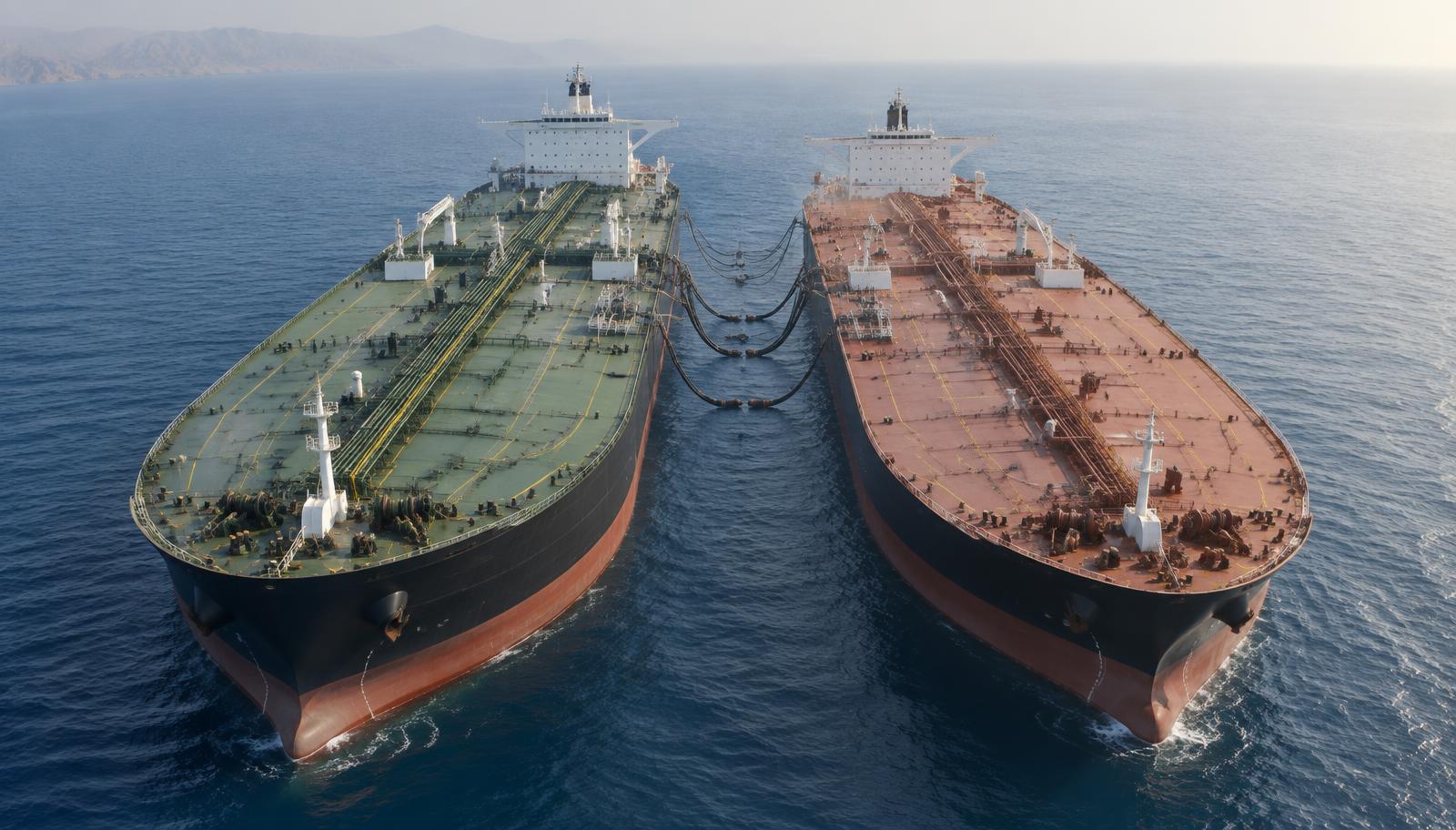
Cover image: AI-generated illustration created for BunkerWatch. It does not show a real vessel or operation.
The crude tanker market is experiencing one of its most extraordinary periods in recent history.
Very Large Crude Carrier rates have surged to exceptional levels as disruption surrounding the Strait of Hormuz, changing crude flows and increasingly complex ship-to-ship transfer operations tighten the effective supply of available tonnage.
The result is a tanker market where moving the crude—not necessarily producing it—has become one of the most significant constraints affecting global oil flows.
VLCC Earnings Reach Exceptional Levels
VLCC earnings have risen dramatically throughout the summer.
Baltic Exchange data cited in recent market reporting showed average VLCC rates around $198,000 per day in July, increasing to approximately $272,000 in August and nearly $449,000 during the first half of September.
By September 18, one measure of daily VLCC earnings had reached approximately $723,000 per day.
Individual routes have moved even higher during September, with assessments on some Middle East-to-Asia trades reaching extraordinary levels.
These figures represent a dramatic change from the tanker environment only a year ago and illustrate how quickly available vessel supply can tighten when normal trading patterns are disrupted.
Hormuz Is Creating a Tanker Capacity Problem
The Strait of Hormuz remains at the center of the current tanker market.
Recent attacks and continued geopolitical tensions have disrupted normal vessel movements through one of the world's most important energy corridors.
Shipping activity through the strait slowed sharply during the final weekend of September. Ship-tracking data cited by Reuters showed only five commodity vessels transiting Hormuz on Saturday and none registered on Sunday, compared with 31 during the previous weekend.
At the same time, Middle Eastern crude still needs to reach international buyers.
That is forcing the market to adapt.
Ship-to-Ship Transfers Are Tying Up More Tankers
One of the most important changes has been the increased use of ship-to-ship transfers.
Instead of every tanker following traditional loading and discharge patterns, additional vessels are being used to shuttle crude through constrained areas before transferring cargoes to other tankers.
This keeps vessels occupied for longer periods and effectively removes available tonnage from the broader market.
Saudi Arabia's crude exports through Hormuz are expected to increase significantly during September, with reported estimates rising from approximately 900,000 barrels per day in August to around 3.6 million barrels per day this month.
Moving that additional volume could require dozens of additional VLCCs.
Ship-to-ship transfer capacity in the Gulf of Oman (near Fujairah) has consequently become increasingly congested, adding another bottleneck to the transportation system.
More Oil Does Not Necessarily Mean Lower Shipping Costs
One of the more interesting features of the current market is that improving crude flows do not automatically solve the transportation problem.
More barrels may be leaving the Gulf, but moving those barrels through complicated transfer arrangements requires additional vessels, additional time and additional logistical support.
A tanker completing a longer voyage or waiting for a ship-to-ship operation cannot simultaneously compete for another cargo.
That reduces effective vessel supply.
This is where tonne-mile demand becomes particularly important.
If the same quantity of crude must travel farther—or requires multiple vessels to reach its final destination—the shipping requirement increases even if global oil consumption remains unchanged.
The Impact Is Spreading Beyond the Middle East
The effects are not limited to Arabian Gulf voyages.
When large numbers of VLCCs become tied up in one region, fewer ships remain available for cargoes elsewhere.
That can place upward pressure on freight rates from West Africa, the United States Gulf and other crude-exporting regions.
Longer voyages resulting from changing crude sourcing patterns can compound the effect.
A refinery replacing a nearby crude supply with barrels sourced thousands of miles farther away may still receive the same amount of oil, but the tanker transporting it remains occupied for considerably longer.
This is why geopolitical disruptions can influence freight markets far beyond the region where the original disruption occurred.
Tanker Values Are Rising With Earnings
The strength of the freight market is also appearing in vessel values.
Recent industry analysis indicates that five-year-old VLCC values increased from approximately $145 million in July to around $172 million by mid-September.
Older tonnage has experienced even larger percentage increases.
Reported values for 15-year-old VLCCs increased from approximately $83.5 million in July to around $135 million by September 18.
When vessels can potentially generate extraordinary daily earnings, the economics of owning existing tonnage change rapidly.
That has increased the value of immediately available ships, including older vessels that might normally trade at substantial discounts to newer tonnage.
Why Tanker Freight Matters to the Broader Energy Market
Tanker freight is sometimes treated as a secondary component of the oil market.
The current environment demonstrates why it should not be.
The delivered cost of crude includes more than the price of the commodity itself. Freight, insurance, voyage duration, bunker consumption, war-risk premiums and logistical delays all contribute to the final economics of moving a barrel from producer to refinery.
When tanker rates rise dramatically, transportation becomes a meaningful component of that equation.
The interaction also works in both directions.
Higher bunker prices increase vessel operating costs, while stronger tanker markets influence the delivered cost of crude and petroleum products.
Understanding energy markets therefore increasingly requires understanding the ships moving the energy.
What to Watch
The Strait of Hormuz remains the most important variable.
Any sustained normalization of vessel traffic could gradually release tanker capacity back into the wider market. Continued disruption, however, could keep vessels tied up in longer and more complicated trading patterns.
Ship-to-ship activity in the Gulf of Oman will also be important, particularly as Saudi crude exports increase.
Beyond the Middle East, watch whether tight VLCC availability continues to influence Atlantic Basin routes and whether exceptionally strong earnings encourage additional vessel transactions and newbuilding orders.
The tanker market is currently demonstrating a fundamental principle of maritime trade:
Oil supply matters—but so does the availability of ships capable of moving it.
Follow the Market with BunkerWatch
BunkerWatch brings bunker prices, energy markets and maritime market intelligence together in one place, helping users understand not only what fuel costs, but the broader shipping environment influencing global energy markets.
Follow BunkerWatch Market Intelligence for continuing coverage of bunker prices, tanker markets, crude oil, marine fuels and global shipping.
Market information is provided for informational purposes only. Freight rates, vessel values and market assessments can change rapidly and may differ between reporting services, routes and individual transactions.
Sources & References
Reuters — Oil Tanker Rates Hit Record Highs Following Iran and U.S. Shipping Attacks
Lloyd's List — Hormuz Crisis Evolves Into an Even Greater Moneymaker for Tanker Owners
Cyprus Mail — Oil Supertanker Rates Surge as Hormuz Disruption Tightens Supply
The National — Oil Tanker Earnings Surge Amid Middle East Disruption