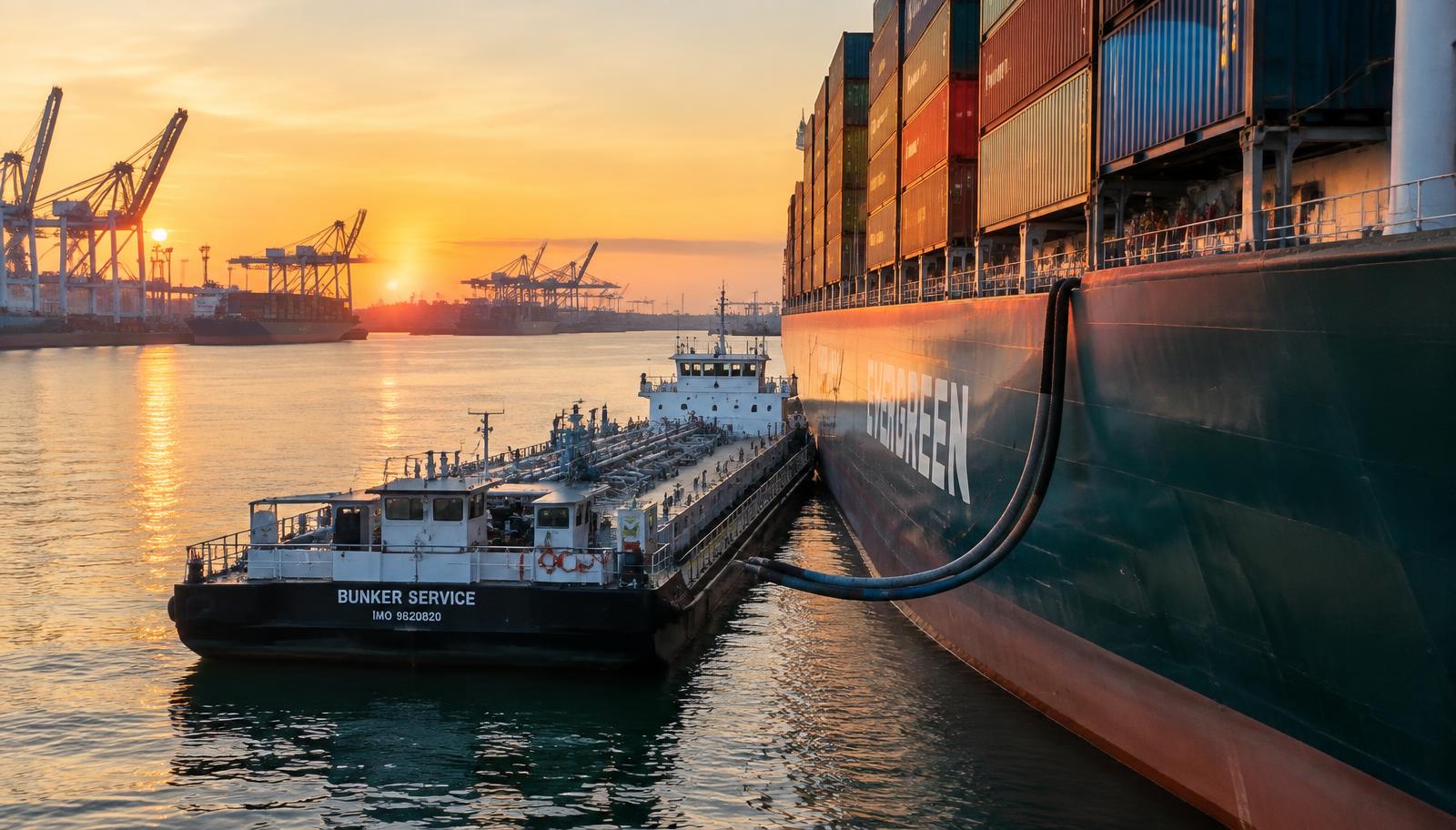
Cover image: AI-generated illustration created for BunkerWatch. It does not show a real vessel or operation.
Global bunker markets remain volatile heading into the end of September, as elevated crude prices, Middle East supply concerns and significant differences between major bunkering hubs continue to shape marine fuel costs.
For vessel operators, charterers and other maritime market participants, fuel remains expensive—but where a vessel stems bunkers can make a substantial difference.
Crude Oil Remains Elevated
The broader energy complex continues to provide a high-price backdrop for marine fuels.
On September 29, Brent crude futures declined to approximately $103 per barrel, while West Texas Intermediate traded around $91 per barrel. Despite the daily decline, Brent remained on track for a significant monthly gain.
The market continues to balance improving Middle East crude exports against persistent concerns surrounding regional supply and transportation. Increased exports from Saudi Arabia and the UAE have helped improve available crude volumes, although logistical complications continue to affect the market.
For bunker buyers, crude remains one of the most important underlying markets to watch as the industry moves into October.
VLSFO Shows Wide Geographic Spreads
Very Low Sulfur Fuel Oil continues to show substantial differences between major global bunkering locations.
Current September 29 indications place Rotterdam VLSFO around $700 per metric ton, compared with approximately $750 in Houston, $800–$830 in New York, $875–$880 in Singapore and approximately $980 in Fujairah.
These differences are significant.
The spread between Rotterdam and Fujairah, for example, is approaching $300 per metric ton. Applied across a large bunker stem, geographic price differences of this magnitude can materially affect voyage economics.
The current market is a reminder that bunker planning involves more than simply watching whether crude oil is moving higher or lower. The location and timing of a stem can be just as important.
Singapore and Rotterdam Continue to Diverge
Two of the world's largest bunkering hubs demonstrate the geographic differences currently present in the market.
Singapore VLSFO is currently indicated around $875 per metric ton, compared with roughly $700 in Rotterdam.
That approximately $175-per-ton difference becomes significant when applied across hundreds or thousands of tons of fuel.
Regional supply, refining conditions, inventories, logistics and local demand can all contribute to differences between bunker markets, even when those markets ultimately share exposure to the same global crude complex.
MGO Remains Expensive
Marine gasoil continues to trade at a substantial premium to fuel oil in many markets.
Current indications place MGO at approximately $1,300 per metric ton in Singapore, around $1,400 in Houston, approximately $1,430 in Rotterdam and around $1,680 in Fujairah.
The higher absolute price of distillate fuels means relatively small percentage movements can translate into meaningful changes in voyage expenses.
This is particularly relevant for vessels operating in emission control areas or otherwise requiring increased consumption of compliant distillate fuels.
A Mixed Global Bunker Market
The global bunker market is not moving uniformly.
Current global bunker indices continue to show significant differences between VLSFO, MGO and HSFO markets, while individual ports can diverge substantially from global benchmarks.
That reinforces the importance of monitoring specific bunkering locations rather than relying exclusively on a global average.
What to Watch
Several factors are worth monitoring as bunker markets move into October.
Middle East crude flows remain particularly important. Increased export volumes could help relieve some supply concerns, but geopolitical and transportation risks remain.
The direction of Brent and WTI will continue to influence the broader marine fuel complex, while movements in refined products could have an outsized effect on MGO.
Perhaps most importantly for vessel economics, spreads between major bunkering hubs remain substantial.
A vessel's bunker cost is ultimately determined not by a single global headline price, but by the fuel grade, quantity, location and timing of the actual stem.
Follow the Market with BunkerWatch
BunkerWatch brings bunker prices, energy markets and related maritime information together in one place, making it easier to compare major ports and monitor the markets affecting marine fuel costs.
Follow BunkerWatch Market Intelligence for continuing updates on bunker prices, marine fuels, crude oil and global shipping markets.
Market information is provided for informational purposes only. Bunker prices are indicative and may differ between reporting services, executable supplier quotations and actual transaction prices.
Sources & References
Reuters — Oil Markets, September 29, 2026